
How it works
Connect the signals.
Change the outcome.
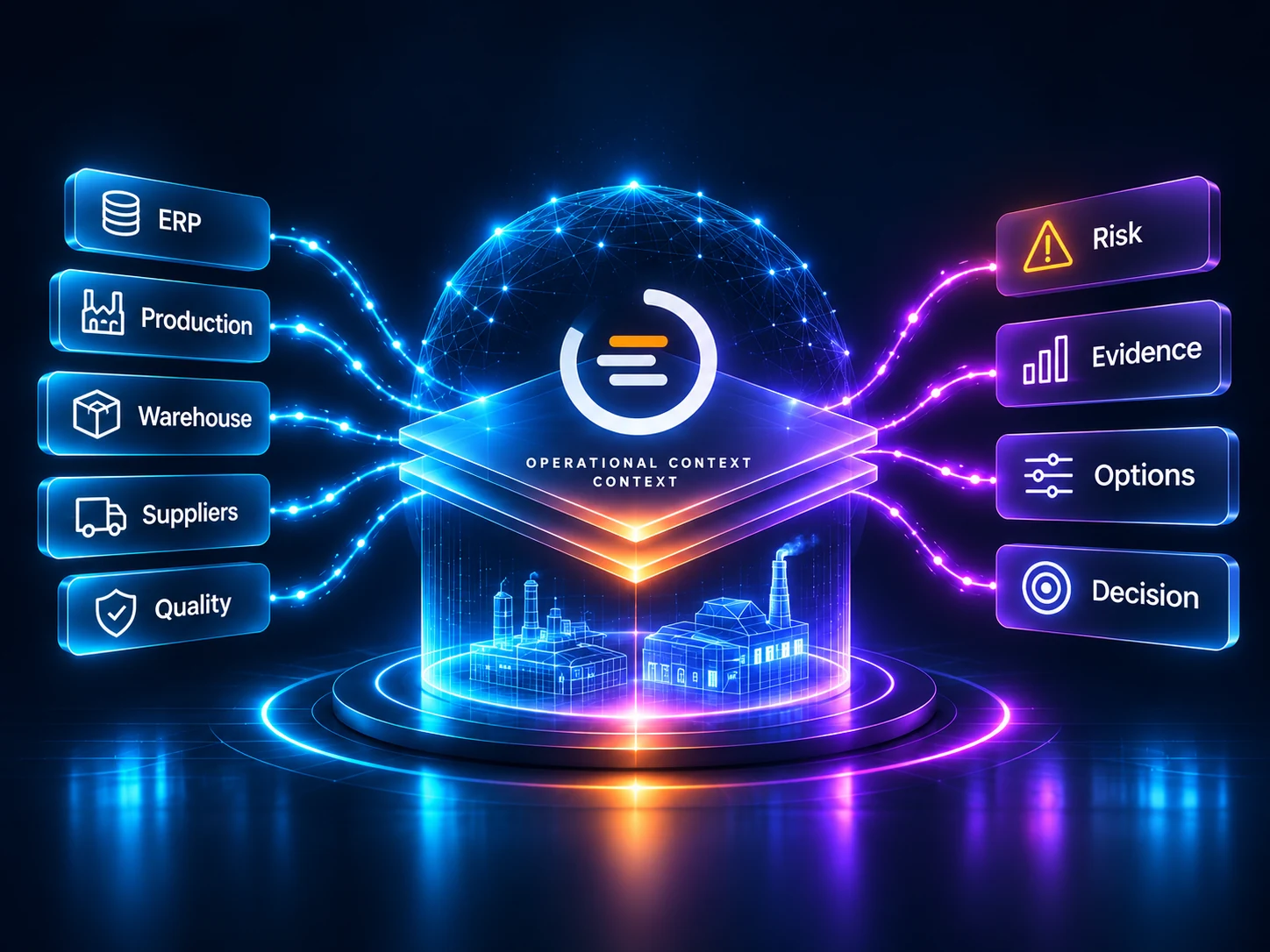
From fragmented systems to governed, evidence-led decisions. A disciplined process designed to make operational intelligence useful in the real world.
Four stages. One connected view.
Read approved ERP, production, warehouse and other source data. Preserve the systems your teams already use.
Match customers, orders, materials, assets and dependencies into a connected view of how work actually moves.
Detect delays and constraints, trace the cause and surface the evidence behind each prioritised risk.
Recommend practical recovery options. Keep the decision owner in control, record approvals and learn from outcomes.
The shared layer
Built once. Used by every solution.
All ten solutions read the same operational context. That is the point: a supplier slip, a machine stop and an inspection hold stop being three separate reports and become one chain with one consequence.
Human control
AI supports the decision. Your people own it.
We begin with explainable rules, governed data and clear operational ownership. Generative AI can help summarise evidence and explore options, but should not invent operational facts or independently make consequential changes to production or customer commitments.
Read-only access, traceable evidence, permissions and approvals form the starting point for customer pilots.